SCENT DETECTION TASTER SESSIONS - NOW AVAILABLE

Venues are: Bexley, Dartford, Belvedere, Abbey Wood and Agility in Erith
  • Home
  • Meet the team
  • Training
  • SCENT DETECTION
    • Scent Detection Workshops
    • SCENT DETECTION COURSE
  • Boarding
  • Top Dog "Walkies"
  • Prices
  • Contact Us
  • Shop
  • Members
  • More
    • Home
    • Meet the team
    • Training
    • SCENT DETECTION
      • Scent Detection Workshops
      • SCENT DETECTION COURSE
    • Boarding
    • Top Dog "Walkies"
    • Prices
    • Contact Us
    • Shop
    • Members
  • Sign In
  • Create Account

  • Orders
  • My Account
  • Signed in as:

  • filler@godaddy.com


  • Orders
  • My Account
  • Sign out

Signed in as:

filler@godaddy.com

  • Home
  • Meet the team
  • Training
  • SCENT DETECTION
    • Scent Detection Workshops
    • SCENT DETECTION COURSE
  • Boarding
  • Top Dog "Walkies"
  • Prices
  • Contact Us
  • Shop
  • Members

Account


  • Orders
  • My Account
  • Sign out


  • Sign In
  • Orders
  • My Account

Top Dog Training School & Home Boarding Ltd

Top Dog Training School & Home Boarding LtdTop Dog Training School & Home Boarding LtdTop Dog Training School & Home Boarding Ltd

London Borough of Bexley License 18/04324/ABHO

London Borough of Bexley License 18/04324/ABHO London Borough of Bexley License 18/04324/ABHO London Borough of Bexley License 18/04324/ABHO
November 2025 Classes

We are taking bookings for our November course now


Please send us an inquiry form to book your space!

We look forward to meeting you and your fur babies!

Find out more

Photo Gallery

Top Dog Levels:

How do I teach

6 week training courses

How do I teach

  1. You will read many exercises I like to teach in my classes, but this is just an idea of what levels are about.
  2. Before I enter the class, I can not predict what level of training students may be, and the very first thing I need is to find out what my customers need.
  3. After observing and chatting with my new customers, I can decide what they need and what I will teach in that course. 
  4. Every dog owner has different expectations from the class
  5. Every owner has a different experience with dogs - some first-time dog owners, and others- own dogs all their life
  6. Please bear in mind this is only a guide.

.

121 sessions

6 week training courses

How do I teach

121/private/individual training sessions 


Sometimes- a class environment isn't ideal for a dog or the owner. 


Or, we want to deal with specific behaviour: pulling on the lead, recall, not good with other dogs, barking, have a rescue dog and want to give them the best start of new life..…


Many owners I have met need to build owners confidence as they are anxious about meeting other dogs, or even just simply don’t know how to deal with behaviours above


We work with you to make sure you have pockets full of knowledge when you leave us, confidence to deal with your dog on your own and work with those behaviours you struggle the most with.


I love 121 as we can have good chat and a laugh, its more personal and owner get 100% of my attention. You make a special connection with family and become a member of a dog family. 


It is up to 2h session and we try our best to make sure you don't have to come back, not because we don't want you back- we want to make sure you know what to do and how to deal with behaviour just from 1 session 
6 week training courses

6 week training courses

6 week training courses

 Five venues to choose from in different areas and days of the week


 Puppies: up to 6 months old

Bronze: from 6 months old & pups who completed Top Dog puppy class

Higher: dogs that have completed Top Dog Bronze class, or bronze level with other training schools

Pro: Those who can do most exercises off the lead


Sessions are 45mins-50min long:


What will we cover:

  • Theory: how dogs thinks think
  • how dogs see the world
  • how dogs learn
  • why they bite/nip and how to stop it
  • how to stop jumping
  • how to ignore distractions
  • what hormones do to the dog's brain
  • Why your dog gets naughty
  • how to cope with the teen stage
  • Why dogs bark and how to stop it
  • Work on:

How to stop the pulling and walk nicely with loose lead

 Eye contact and attention on you while walking

Recall distractions: other dogs, cats, squirrels, food on the floor, runners, and bikes.

Barking: window, other dogs, runners, cyclists, children, people without dogs 

Nipping, chewing, biting

Boredom, treats, toys, digging the garden and everything you may have a problem with 


And all the things you need in real life.
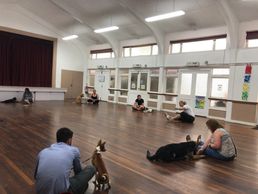
Video Consultation

6 week training courses

Puppy training
puppy training near me
dog toys
crate training
dog training collars
puppy classes

You can't attend 121 sessions, or maybe you cannot use Zoom classes, or it's at the wrong time- Video consultation training could help, as we could call through Facebook messenger or WhatsApp. 


We can cover all the behaviour as we can also send you a video of the exercise and then talk through it and you can even be in the garden or outside, show me how you do it, and I can be there and praise you for how well you are doing or maybe a correct little mistake. 


We can have one h or two h calls. Are all up to you. 

PUPPY CLASSES- PUPPY PRIMARY SCHOOL:

  • How dogs think, how their brain works and how they learn 
  • Respond to their name and pay attention to the owner from any distraction
  • Puppy play- how they play, what is acceptable in the play and when to stop the play,
  • Recall
  • Walking on lead without pulling
  • Hand signals
  • Eye contact
  • Sit & Stay
  • Leave food from hand, floor  or any other distraction (cats, foxes, other dogs, rubbish) 

Bronze class- Secondary school

  • How hormones affect dogs' brain
  • Attention to the owner
  • Walking past other dogs without paying attention to other dogs or any other distraction
  • Introduction to walk the dog with no hands on thelead
  • Use your body to tell your dog what to do
  • Sit & watch the owner while other dogs or distractions walk past you
  • Be able to sit nicely with other dogs in one place without moving, playing with other dogs
  • Leave and come back to the owner from any distractions
  • Sit nicely with the owner while the owner is chatting with another dog owner
  • Sit and stay while the owner walk away 5-10 paces away for up to 1 min
  • Sit and stay, 5-10 paces away, recall to heel


PUPPY COLLEGE (Silver)

  • Introduction to walking off lead
  • Start using more hand signals for each command & No voice commands
  • Using your body to show the dog what you want
  • Stay, facing away from the dog, walk away- recall to heel
  • Sit & Stay, facing away from the dog, while moving around for over a min 10- 15 steps away
  • Leave- loose lead or no lead, walking past distractions and walking away from when told
  • Door control of lead
  • Introducing Turns- front, heel, round
  • Introduction to separation/isolation- dog stays calm when the owner in sight
  • Emergency Stop 

PUPPY UNIVERSITY (Gold)

  • ​Walking off lead "heel"
  • Walking "heel" with changing speed & directions weave between dogs
  • Leave- off lead. walking past it, walking away from when told
  • "Stay" 2-5min without changing position in & out of sight
  • "leave" walking to, past people, dogs, me
  • "recall" from distance to owners preferred side 
  • recall from distance to side & carry on walking heel
  • Go to "Bed" from distance 
  • Introduction to "stop"
  • Relaxed isolation in/out of sight

PUPPY MASTERS (PLATINUM)

PUPPY MASTERS (PLATINUM)

  • Walking "Heel" confidently with owner and around other distractions (food, toys, children, dogs) without any corrections
  • Combinations (off lead walk, stop, stay, down, recall to side- create your own routine
  • "stop" & "drop"
  • distance control facing to & away from the dog
  • Toy- Bring a toy, put it in a toy basket
  • Recall with Distractions (food, dogs, toys)
  • send to bed from distance
  • Emergency stop going forwards
  • "find"- you/toy hide from dog and get them to find you/toy

                Still working on it 


   What is dog training? 

We all believe that the dog training is teaching a dog particular skills or behaviours. Dog training includes teaching a dog to react to particular commands and cues as well as to act independently by deliberately changing their natural behaviour (not to chase squirrels, birds or cats. Not to bark, not to dig the garden)


But how can we teach dogs all those things if we as the owners don’t know what we are doing. Many of us have an idea, but it is the expectation of how the dog should behave. We remember how our nans and grandads or maybe even parents train dogs- shouting No, hitting with newspaper when dog touched something, or maybe rubbing their nose when dog done wee in the house. But we never praised the dog when they stopped doing naughty things because we are too upset or annoyed and it is our expectation that the dog should behave how they do after they been punished. 


The times have changed and now we are actually teaching the dogs how to behave instead of just punishing them when they did something wrong (reminds me of my childhood a bit) But how? 


First of all, us Dog Owners need to learn everything there is to learn about the dog. 

What is the dog? 

Differences between the breeds?

What your dog was bred for?

Natural instincts?

How they think? 

How they learn? 

What they need to learn?

Why they need to learn those things?

Differences between each dog: 

If you have 10 golden retrievers you will notice that even though they are the same breed, they have different characters and will behave differently is different situations- Same as if you have 10 children, but they have different characters and will behave differently. 


What dog behaviour depend on? 

Dogs behaviour depends not only on how new owners will treat them, but also how they were bred:

Character or mum and dad: 

were they selected carefully talking about behaviour. Were they friendly, well socialised, not aggressive, not nervous and well balanced dogs? 

How were they bred?

Did breeders take they time to introduce the dogs, were dogs happy to be with each other, did breeding needed to involve human help or it happened naturally. 

How did pregnancy go: 

Was mum looked after well while pregnant, was there enough food, was food nutritious, did mum go through any stress

Birth: 

Was puppy born inside of the house, or outside in a dog barn or even in a big kennel. Was birth of pups easy, were all pups healthy

First weeks: 

Was mum a good mum? Feeding her pups, being with them, teaching first important skills or did she wanted anything to do the pups and they had to be hand fed by the breeders.  Was environment stress free and all pups growing up happy and healthy. 

As you can see, dogs’ behaviour doesn’t only depend on what you a new owners gave to the dog, but way before you. 

When I choose my puppy, I always visit the house to meet mum, to see where the dogs kept, watch all the pups and have a chat to the breeder about the dad, why they chose him. 

Think why we are choosing this dog: 

Have you read and researched everything there is to know about the breed?

Can you provide the dog with everything they need for that breed? Space, exercise, food, companionship, grooming and training?

Or is it because:

They are cute?

Your friends got it and you absolutely fell in love with that breed? 

And the most important is:

Can you provide all 5 freedoms of Animal Welfare: 

1. Freedom from hunger and thirst: by ready access to fresh water and a diet to maintain full health and vigour.

2. Freedom from discomfort: by providing an appropriate environment including shelter and a comfortable resting area.

3. Freedom from pain, injury or disease: by prevention through rapid diagnosis and treatment.

4. Freedom to express normal behaviour: by providing sufficient space, proper facilities and company of the animal’s own kind.

5. Freedom from fear and distress: by ensuring conditions and treatment which avoid mental suffering.

I know right, this is all before you even choose the dog. 


What should we train our pups?


So now we know what dog we have, we are ready to teach them how we would like them to behave. But what is it that we need to teach them. Every human in the world wants something different, but there are few things that we all want to teach our dogs. When owners bring their new puppies to training, they have already taught thing or two- some, nothing at all. 

When pups come to school, most of the pups know sit and paw. These two things I see in 90% of pups as they are so easy to teach. 

There are so many different types of training, but is it that we need to have well behaved family dog. 

There is training when puppy comes home:

Where puppy sleeps?

Where and when puppy eats?

Where puppy goes toilet? 

Where puppy plays?

Leave puppy home when you out

And then its training training:

Socialisation with other dogs, environment, people, surfaces, car, sounds, textures and many more

Respond to their name. 

Recall

Walking nicely on lead

Sit, down, up.

Stay

Watch

Settle

Leave

How to ignore other dogs And the most important is :

What are 5 freedoms of Animal Welfare: 

1. Freedom from hunger and thirst: by ready access to fresh water and a diet to maintain full health and vigour.

2. Freedom from discomfort: by providing an appropriate environment including shelter and a comfortable resting area.

3. Freedom from pain, injury or disease: by prevention through rapid diagnosis and treatment.

4. Freedom to express normal behaviour: by providing sufficient space, proper facilities and company of the animal’s own kind.

5. Freedom from fear and distress: by ensuring conditions and treatment which avoid mental suffering.

When it’s ok to say hi to other dogs

Leave wild animals alone 

Not to jump

Not to bite

And everything else what we thing of. 

So What is Top Dog Training? 


First of all is to teach owners all about the dogs. Then we start from basics and go into harder things as the puppy progress week by week and then course by course. I always advise owners to do puppy class and bronze level. These two levels will give enough information to have a well behaved dog at home and community. 

Every week you learn something new with how to do it and why we actually need it, where will you use it. Then you practice what we learned that week at home. Next week the next step, but it will be connected to the first step. 

Top Dog teaches real life training that you will use on daily basis. We don’t learn unnecessary thigs unless you ask us. I always ask my owners what they would like to learn and why. What they expecting to gain from my classes, then we run the class designed for the students in that group. 


What do you think? Let us know   

Training Venues

Bexley

1 Davis Way

Foots Cray

Kent

DA14 5JR

Monday night:

Puppies:   18.00- 18.45pm

Bronze:    19.00-19 .45 pm 

Silver/Gold: 20.00- 20.45pm 



Dartford Venue

Oakfield Primary Academy

Oakfield Lane

Dartford

DA1 2SW

Tuesday night:

Puppies 18:00- 18:45pm

Bronze 19:00- 19:45pm

Silver/Gold 20:00- 20:45pm

Belvedere Venue

Belvedere Junior School

Mitchell Close

Belvedere

DA17 6AA

Wednesday night:
Puppies:     18.00- 18.45pm
Bronze:       19.00- 19.45pm
Silver/Gold: 20.00- 20.45pm



Abbeywood

C2K Community Centre

2 Penmon Road

Abbeywood

London

SE2 9PH

Saturday Morning:  

Puppies:     09:30- 10:15am 

Bronze:       10:30-11:15am 

Silver/Gold: 11:30-12:15pm


Sunday socialisation play

Parkway Primary School

Alsike Road

DA18 4DP

Sunday Morning:

9:30am

Weather dependant


Agility

Parkway Primary School

Alsike Road

DA18 4DP

Sunday Morning:

(It’s very easy to find it on maps)

Done it once: 10.30 am

Done it twice : 11.30 am 


Copyright © 2025 Top Dog Training School & Home Boarding  - All Rights Reserved.

Powered by

  • Contact Us